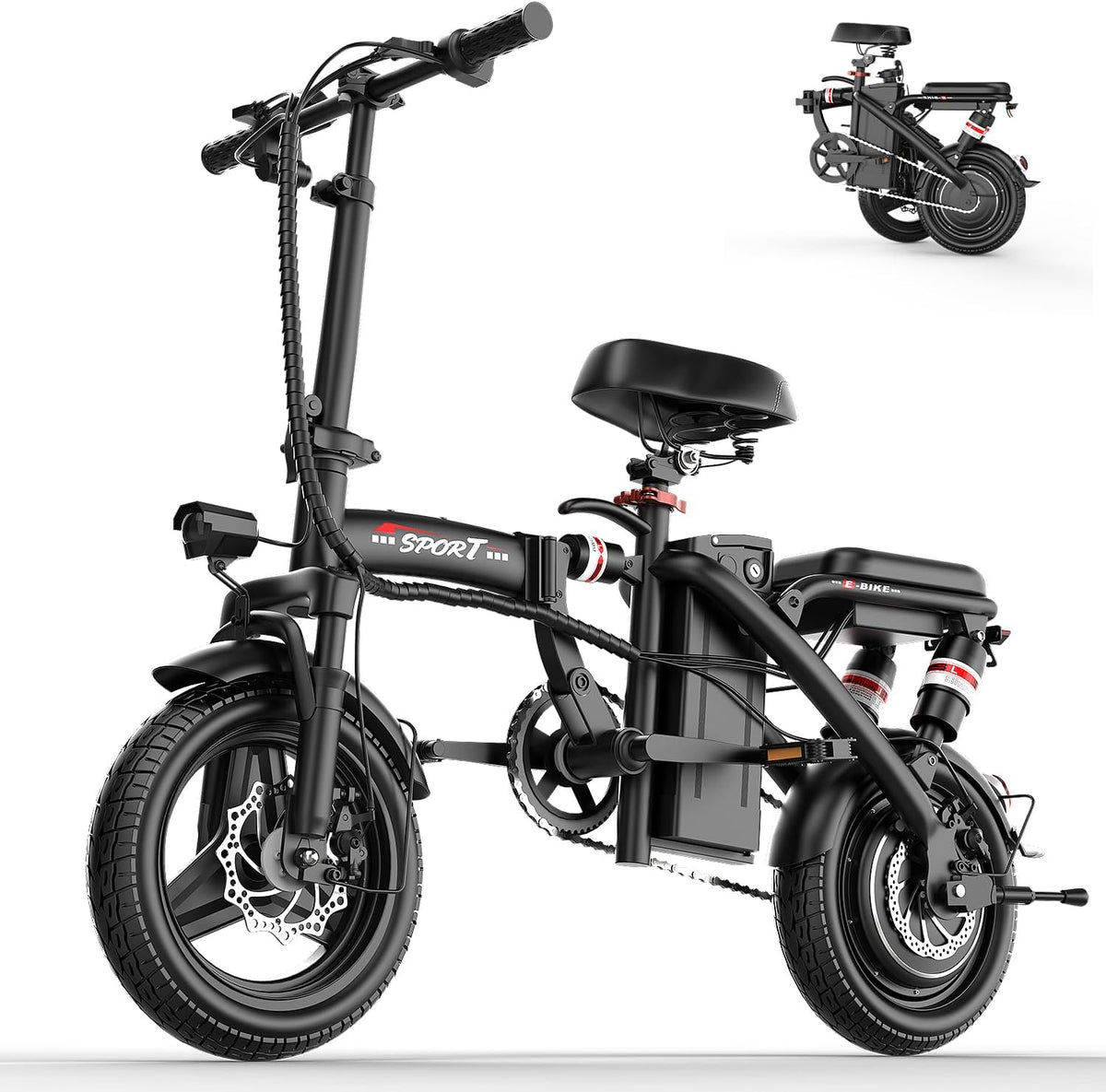
A small apartment, a car boot or an RV storage compartment can make a folding e-bike appealing. The important question is not simply whether a bike folds, but whether it works in your space.
Measure the opening, then the space
A storage compartment may be large enough inside but difficult to access through its door. Record the opening’s width and height, available length, and any obstacles you need to lift the bike over.
- Check the exact folded dimensions.
- Ask whether the pedals and handlebars must be folded too.
- Compare the complete lifting weight with what you can comfortably manage.
- Leave space for the charger and other items without pressing against the bike’s controls or battery connections.
Think about the ride, not just the fold
Consider the length and surfaces of your usual trips. Try to picture the riding position, getting on and off, and how you will store the bike when you arrive. Wheel size is one part of the format, not a complete fit guide.
Meet Compact 14
The GWEIT Compact 14 combines a folding frame with 14-inch wheels and a removable 48V 10Ah battery. Adjustable saddle and handlebar positions help you set up the bike for your body.
Check the product’s photos and available measurements. If you need a specific folded dimension or weight for a vehicle compartment, ask before deciding; do not estimate it from the photo.
Plan storage and transport
Use the supplied folding and locking instructions. Secure the bike during vehicle transport and follow any carrier’s weight and fit requirements. Keep charging arrangements consistent with the bike’s manual and the rules of the place where you are staying.
Choose for your routine
If you rarely need to fold a bike, a full-size commuter may deserve a place on your shortlist. Compare the commuter models with Compact 14 and decide which format fits more of your everyday needs.


